Have you ever been deep in a late-night text exchange, only for the other person to suddenly drop a three-letter acronym that leaves you staring at your screen in total silence? The digital landscape evolves with such rapid speed that even seasoned internet users occasionally find themselves scratching their heads over daily messaging habits.
Shorthand expressions dominate our interactions because they match the natural, fast pace of our fingers on glass. Among the myriad of acronyms filling up our notifications, searching for clarity regarding the gts meaning text context is an incredibly common phenomenon.
The confusion stems from how seamlessly these letters shift between casual affectionate sign-offs and completely different definitions depending on who is typing them. Misinterpreting a message like this can break the flow of an intimate conversation or make you miss a subtle social cue entirely.
Unpacking these micro-expressions is about bridges of empathy, ensuring we connect with absolute clarity without losing emotional depth. Let’s explore exactly how this small piece of internet dialect shapes our nightly communication patterns.
GTS Meaning Text – Quick Meaning
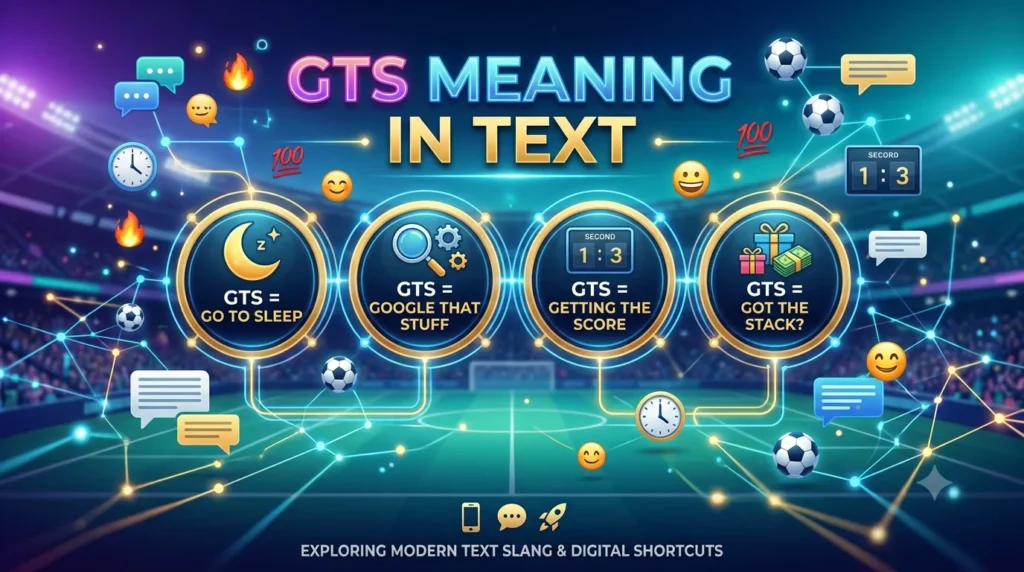
In contemporary text messaging and across social media, GTS most commonly stands for “Go To Sleep.”
It serves as a highly efficient, casual way to tell someone that it is time to wrap up the conversation for the night, log off their devices, or get some much-needed rest.
- Primary Meaning: Go To Sleep (A comforting or commanding evening sign-off)
- Secondary Meaning: Google That Sh*t (An aggressive or funny prompt to search for an answer independently)
- Tertiary Meaning: Going To Sleep (An informative declaration of one’s own immediate actions)
“You have a massive exam tomorrow morning at 8 AM, so stop scrolling and gts!”
“I can’t keep my eyes open any longer, gts everyone.”
“Instead of asking me how many miles are in a kilometer, just gts.”
Origin, Cultural Background, and Evolution
From Early Chatrooms to the Mobile Revolution
Before touchscreens featured smart predictive dictionaries, early internet pioneers on platforms like IRC and AOL Instant Messenger had to type every single letter manually. Because of this physical limitation, long phrases were chopped down to their absolute bare essentials. The phrase “go to sleep” naturally compressed into GTS during the late 1990s and early 2000s, becoming a standard closing bracket for late-night desktop chats.
The Smartphone Era and Social Media Impact
When smartphones turned text messaging into an uninterrupted, 24/7 stream of connection, our relationship with rest changed dramatically. Platforms like Snapchat, TikTok, and Instagram direct messages introduced an environment where being online constantly is the norm.
The acronym evolved from a basic time marker into an emotional boundary tool. It became a cultural mechanism used to nudge friends away from toxic late-night doom-scrolling, transforming from a simple command into a shared social agreement about mental well-being.
Real-Life Conversations Across Modern Platforms
WhatsApp Group Chat
Marcus: I’m still trying to fix this broken code for the morning presentation. It’s driving me amazing.
David: Bro, you’ve been staring at that laptop screen since yesterday afternoon.
Sarah: Exactly @Marcus gts right now, your brain needs a total reset before the client meeting.
Instagram Direct Messages
Maya: Sends a funny video meme at 3:15 AM
Chloe: Why are you still awake watching these clips right now? 😂
Maya: I honestly have no idea, my sleep schedule is completely ruined this week.
Chloe: Go text your mind to relax and gts! Talk to you tomorrow morning.
TikTok Comments Section
User1: I just realized I’ve been scrolling through this specific feed for four hours straight without moving.
User2: This is your official sign from the universe to close the application.
User3: Real, everyone reading this comment thread needs to gts immediately.
Standard Text Messages
Mom: Justin, I can see the light under your bedroom door from the hallway.
Justin: Just finishing up this last chapter of my book, Mom.
Mom: It is a school night. GTS.
The Emotional and Psychological Weight Behind the Slang
The Boundaries of Digital Care
Texting isn’t just about the literal characters typed; it is about the quiet emotional currents moving between them. Sending a message to tell someone to close their eyes is an act of casual intimacy. It signals that you care about their physical health, cognitive recovery, and daily stamina, creating a protective boundary when the other person lacks the self-discipline to log off themselves.
The Defensive Shift to Self-Care
Modern communication psychology indicates that younger generations use short commands to strip away unnecessary emotional pretense. Saying “I think you should consider turning off your device because you look tired” can feel overly maternal or heavy. A clean, lowercase three-letter acronym keeps the mood entirely light, safe, and modern while still delivering the exact same caring message.
A Lesson from the Consulting Trenches
During my years analyzing linguistic patterns in remote teams, I watched a brilliant young designer burn out because he felt obligated to reply to messages at all hours. One evening, his seasoned creative director sent a single line: “gts, nothing we do tonight changes the launch timeline.” The designer later told me that simple phrase felt like an immense weight being lifted off his shoulders. That is the authoritative power of a well-placed boundary.
Usage in Different Contexts and Settings
Social Media Feeds
On public timelines like Twitter or TikTok, the acronym is frequently used in a performative, communal way. Creators will post it as a late-night status update to tell their entire follower base that they are officially closing their accounts for the evening, setting a healthy digital boundary.
Friends and Intimate Relationships
Among peers and romantic partners, these letters act as a cozy digital blanket. It is a warm, familiar sign-off that carries zero negative tension. However, if used in its secondary format (“Google that sh*t”) among close friends, it instantly shifts into a playful, sarcastic poke at someone’s laziness.
Work and Professional Environments
Warning: Never use this specific shortcut in professional emails or corporate Slack channels.
In a professional setting, telling a colleague or a client to “go to sleep” via shorthand looks incredibly dismissive, informal, and potentially rude. If a teammate is working too late, express your concern using traditional corporate etiquette to maintain professional distance.
Professional Alternative: “Hi Jonathan, I notice you are putting in extra hours tonight. Please feel free to step away from the project and resume this fresh tomorrow morning.”
Deciphering Casual vs. Serious Tones
The ultimate meaning relies completely on punctuation marks and sentence placement. A lowercase gts tucked next to a sleeping face emoji is an affectionate sign-off. A capitalized, standalone “GTS” sent during a frustrating debate over trivia facts is almost certainly an angry instruction to search the internet for the answer independently.
When to Safely Avoid Using the Term
Moments of Deep Crisis
If a friend reaches out to you late at night to express genuine emotional pain, anxiety, or deep vulnerability, replying with a quick shortcut is incredibly cold. The recipient will likely interpret your lack of full words as a total absence of empathy or an attempt to push their problems away so you can rest.
Cross-Demographic Conversations
Linguistic habits vary significantly across age brackets and professional cultures. If you are texting an older family member or an international colleague, using highly localized smartphone shortcuts will simply stall the dialogue as they stop the conversation to decipher what you mean.
Common Misunderstandings and Tone Shifts
The most significant obstacle with this specific acronym is its dual identity. If someone asks you a basic factual question and you reply with the shortcut, they might think you are telling them to go to bed because they are annoying you. Conversely, if you mean to tell someone to go to rest, but they read it as the Google variation, they may feel insulted.
Reading the environmental context is absolutely essential. If the conversation is occurring past midnight, the sleep definition is almost always the intended path. If the conversation is happening during the middle of the working day and involves a debate over data, assume the internet search meaning applies.
Comparing Digital Nightcaps
| Slang Term | Core Intention | Emotional Tone | Best Environment |
| GTS | Go To Sleep / Google It | Caring boundary or sarcastic nudge | Close friends, late-night threads |
| GN | Good Night | Standard, polite, neutral | Casual acquaintances, family |
| BRB | Be Right Back | Informative, temporary | Active daytime chat sessions |
| GTG | Got To Go | Hurried, concluding | Abruptly leaving an active conversation |
| NN | Night Night | Affectionate, cozy, close | Romantic partners, best friends |
Key Insight
The Authority of the Nightcap
While a term like GN simply states a polite conclusion to the evening, GTS acts as an active, supportive intervention, telling the recipient to prioritize their well-being over their device.
Modern Variations and Semantic Offshoots
- GTS RN: Go to sleep right now. Maximum urgency used when a friend is dangerously exhausted or has an early flight.
- Time to GTS: It is time to go to bed. A soft, natural announcement that the evening has reached its official conclusion.
- Pls GTS: Please go to sleep. Adding a layer of soft politeness to a late-night command.
- GTS Bro: Go to sleep, brother. Used heavily within male friendship groups to conclude late-night gaming sessions.
- Imma GTS: I am going to sleep. Utilizing the acronym as a personal action statement instead of a command.
- GTS Fr: Go to sleep for real. Emphasizing that the hour has become completely unreasonable for chatting.
- GTS Fool: Go to bed, silly. A highly affectionate, teasing way to conclude an evening conversation with a partner.
- Just GTS: Just go search it. The daylight variation used to tell someone to look up a fact on their own.
How to Respond Smoothly Based on the Tone
Casual & Reassured Replies
“You’re completely right, my eyes are burning. Turning off my phone now, goodnight!”
“Heading to bed as we speak, talk to you tomorrow!”
Funny & Sarcastic Comebacks
“You can’t fire me from this chat, I quit! Going to bed now.”
“But the internet secrets are so much more interesting than my dreams right now!”
Mature & Grounded Responses
“Thank you for the nudge, I’ve been overworking this project all evening. Locking up the desk now.”
“Agreed, let’s table this discussion and finalize everything with fresh eyes in the morning.”
Respectful & Soft Boundaries
“I appreciate you looking out for me, dropping off the grid now. Have a restful night.”
“Closing my tabs as we speak, sleep well!”
Regional, Cultural, and Generational Adaptations
Western Smartphone Habitats
In the United States, the United Kingdom, and Australia, the term is highly integrated into the daily vocabulary of digital natives. It is viewed as an essential component of text etiquette, allowing users to exit long, ongoing message threads gracefully without making a big scene.
Global Internet Ecosystems
In non-Western countries where English functions as a secondary language, this specific acronym is used almost exclusively in its secondary format (“Google that sh*t”) inside tech forums or gaming lobbies, as local languages have their own unique phrases for saying goodnight.
The Generational Breakdown: Gen Z vs. Millennials
Gen Z utilizes the phrase natively in its lowercase format (gts), viewing it as an act of casual support among friends who struggle with digital addiction and late-night scrolling habits.
Millennials, however, often view the three letters with a bit of hesitation. They generally prefer using standard options like GN or typing out full phrases to ensure their tone isn’t mistaken for an aggressive command.
Digital Safety: Is This Expression Safe for Kids?
For parents keeping an eye on their children’s smartphone habits, this acronym is entirely safe. It carries zero hidden dangerous meanings, inappropriate double entendres, or references to illicit substances. The only minor nuance to watch for is its use as an aggressive acronym (“Google that sh*t”), which can sometimes appear in mild online arguments or gaming trash-talk scenarios.
Frequently Asked Questions
Does GTS ever mean something inappropriate in text?
No, it does not possess any adult or dangerous meanings. It is a completely clean, functional piece of text shorthand used for managing daily rest or web searches.
How can I tell if someone is being rude with the acronym?
Look at the timing and topic. If you just asked a question about a fact during the day and they reply with “GTS,” they are being slightly sarcastic. If it’s 2 AM, they are simply being protective of your sleep.
Can I use GTS in a professional Slack workspace?
It is highly recommended to avoid it entirely. Workplace communication demands full words to preserve mutual respect, clarity, and standard organizational professionalism.
Why do people type GTS instead of just saying Goodnight?
It carries a more active, caring tone. While “goodnight” simply marks the end of a chat, telling someone to “go to sleep” implies that you are actively thinking about their health and recovery.
What is the opposite of GTS in texting slang?
A natural opposite would be STAY UP or WUU2 (What are you up to?), which invite the person to remain awake and continue the active text exchange.
The Final Frame: Navigating the Evening Stream
Human communication has never been a static monument; it is a fluid, evolving ecosystem that constantly molds itself to fit the technological tools we use to connect our lives. Hyper-short cuts like these are not destroying our capacity for depth—they are simply changing the rhythm of our digital interactions.
The next time those three small letters pop up on your dark screen in the dead of night, you won’t need to feel a wave of text confusion. By assessing the hour, reading the relationship, and responding with ease, you can close your device and drift off to sleep with absolute peace of mind.