If you spend time on social media, texting apps, or online communities, you’ve probably seen someone type “IDGAF” during an argument, emotional rant, or sarcastic conversation. The phrase appears everywhere — from TikTok captions to Instagram comments and late-night text messages.
People search for “idgaf full form in chat” because the slang can feel confusing, aggressive, or emotionally loaded depending on the situation. Some users think it is funny and confident, while others see it as rude or dismissive.
The truth is that IDGAF is more than internet slang. It reflects modern digital emotions, online attitude culture, and the way people express frustration, independence, or emotional exhaustion in quick conversations.
Understanding when people use it — and how the tone changes its meaning — can help you avoid misunderstandings and communicate more confidently online.
IDGAF Full Form in Chat – Quick Meaning
What Does IDGAF Mean?
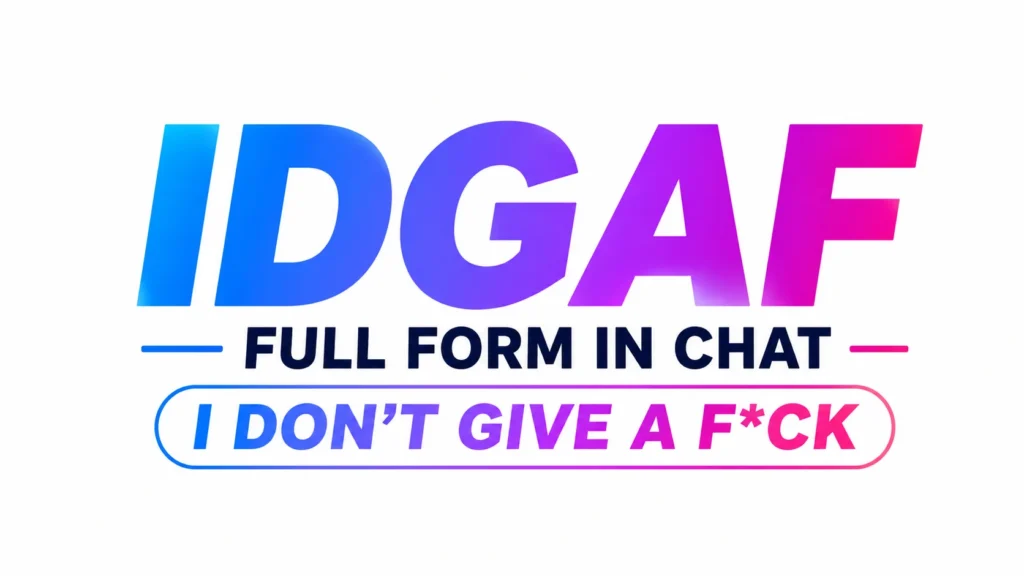
IDGAF stands for:
- I Don’t Give A F*”
It is commonly used in chats, texting, memes, and social media posts to show that someone does not care about a situation, opinion, or outcome.
The phrase usually expresses:
- Emotional detachment
- Confidence
- Frustration
- Rebellion
- Sarcasm
- Emotional burnout
Simple Meaning in Everyday English
In casual language, it basically means:
“I don’t care.”
But emotionally, it often feels stronger than that.
Short Chat Examples
“People keep judging me but honestly IDGAF anymore.”
“He left me to read. IDGAF.”
“Wear whatever you want. IDGAF what others think.”
Origin & Background
Where Did IDGAF Come From?
The expression developed from spoken English long before the internet existed. People have always used strong language to emphasize emotions, especially anger or emotional independence.
As texting culture grew in the early 2000s, abbreviations became popular because they saved time and space. That is when phrases like:
- LOL
- BRB
- OMG
- IDK
- IDGAF
started spreading rapidly across chat rooms and mobile messaging.
Social Media Influence
Platforms like TikTok, Snapchat, Instagram, and Twitter helped IDGAF become part of everyday internet culture.
Today, the phrase often appears in:
- Confidence captions
- Breakup posts
- Emotional memes
- Bold replies
- Motivational content
People sometimes use it to create a “strong personality” image online.
How the Meaning Evolved
Originally, IDGAF sounded openly aggressive.
Now, depending on the context, it can also mean:
- “I’m protecting my peace.”
- “I’m emotionally tired.”
- “I refuse to stress anymore.”
- “I’m done explaining myself.”
That emotional shift is why younger generations use it differently than older users.
Real-Life Conversations
WhatsApp Conversation
Person A:
Did you see what they said about your outfit?
Person B:
Yeah, but IDGAF honestly. I liked it.
Instagram DM Conversation
Person A:
You unfollowed him finally?
Person B:
Yep. IDGAF anymore. I’m moving on.
TikTok Comments
Person A:
People are mad at your opinion lol.
Person B:
IDGAF. Everyone gets offended online these days.
Text Message Conversation
Person A:
You should apologize first.
Person B:
Why should I? He was wrong too. IDGAF if he’s upset.
Emotional & Psychological Meaning
What Emotion Does IDGAF Express?
Although it sounds simple, IDGAF can carry intense emotional weight.
It may express:
- Anger
- Emotional exhaustion
- Confidence
- Defensiveness
- Independence
- Hurt feelings hidden behind humor
Sometimes people use it because they truly do not care.
Other times, they use it because they care too much and want to hide vulnerability.
Why People Use It
Modern online communication moves fast. People often compress emotions into short slang phrases.
Instead of writing:
“I’m tired of worrying about everyone’s opinions.”
someone simply types:
“IDGAF.”
That short phrase instantly communicates frustration and emotional distance.
What It Reveals About Modern Communication
Digital culture rewards boldness and emotional intensity.
Expressions like IDGAF help users appear:
- Confident
- Untouchable
- Independent
- Emotionally strong
But psychologically, the phrase can sometimes mask insecurity or emotional pain.
A Realistic Scenario
After a stressful breakup, someone might post:
“IDGAF anymore.”
Friends may think they have fully moved on, but emotionally, the person could still be hurting deeply.
This is common in modern online behavior where emotional protection often appears as confidence.
Usage in Different Contexts
Social Media Usage
On social media, IDGAF is often used dramatically for attention, humor, or empowerment.
Examples include:
- “IDGAF what people think.”
- “Living my life. IDGAF.”
- “New haircut and IDGAF if you hate it.”
Friends & Relationships
Among close friends, the phrase can sound playful or emotionally honest.
For example:
“Everyone canceled plans but IDGAF. More sleep for me.”
In relationships, however, it can sound cold or dismissive.
Work & Professional Settings
Using IDGAF professionally is usually inappropriate.
It may appear:
- Disrespectful
- Aggressive
- Immature
Even in casual workplaces, the phrase can damage communication if misunderstood.
Casual vs Serious Tone
Tone changes everything.
Casual use:
“IDGAF about pineapple on pizza debates.”
Serious use:
“IDGAF what happens anymore.”
The second example feels emotionally heavier and more concerning.
When NOT to Use It
Professional Communication
Avoid using IDGAF in:
- Emails
- Meetings
- Interviews
- Client conversations
- Academic settings
The wording contains profanity and may offend people.
Sensitive Emotional Situations
Never use it when someone is:
- Grieving
- Sharing trauma
- Discussing mental health
- Asking for emotional support
It can make you appear emotionally disconnected.
Cultural Sensitivity
In some cultures, direct emotional language feels disrespectful or overly aggressive.
Older generations may especially view the phrase negatively.
Situations That Cause Misunderstanding
Text messages lack facial expressions and tone.
A playful “IDGAF lol” might accidentally sound hostile if the other person is already upset.
Common Misunderstandings
People Think It Always Means Confidence
Not always.
Sometimes it signals emotional pain, burnout, or disappointment rather than genuine confidence.
Tone Confusion
Because texting removes vocal tone, readers may misunderstand the emotional intention.
One person may mean:
“I’m relaxed.”
Another may hear:
“I hate everyone.”
Literal vs Figurative Meaning
Many users say IDGAF emotionally rather than literally.
For example:
“IDGAF if he texts back.”
In reality, they may still care deeply.
Comparison Table
| Expression | Meaning | Emotional Tone | Common Usage |
| IDGAF | I don’t care at all | Strong, rebellious | Emotional chats |
| IDC | I don’t care | Mild, casual | Everyday texting |
| Whatever | Indifference | Passive | Arguments |
| No worries | Relaxed acceptance | Friendly | Casual conversation |
| YOLO | Live freely | Adventurous | Social media |
| Stay unbothered | Ignore negativity | Positive confidence | TikTok captions |
| I’m over it | Emotionally finished | Tired or frustrated | Relationships |
| Care too much | Emotional attachment | Vulnerable | Honest discussions |
Key Insight
IDGAF feels stronger and emotionally sharper than most similar expressions. That intensity is exactly why people use it during emotional or dramatic moments online.
Variations / Types
IDC
Means “I Don’t Care.”
A softer and less aggressive version of IDGAF.
IDFC
Means “I Don’t F***ing Care.”
Even more emotionally intense.
DGAF
Shortened form of “Don’t Give A F***.”
Popular in memes and captions.
Zero F’s Given
A humorous internet variation showing complete indifference.
Unbothered
Means emotionally unaffected by negativity or criticism.
Whatever
Used to dismiss arguments or opinions casually.
Meh
Shows mild emotional indifference or boredom.
Over It
Means emotionally exhausted with a situation.
Couldn’t Care Less
A more grammatically formal version of indifference.
No Fs Given
A censored internet-friendly variation often used publicly.
How to Respond When Someone Uses It
Casual Replies
- “Fair enough.”
- “Do what makes you happy.”
- “Honestly, I get it.”
Funny Replies
- “That confidence level is dangerous.”
- “Main character energy.”
- “Okay rebel.”
Mature Replies
- “I understand why you feel that way.”
- “Maybe take some time before reacting.”
- “You sound frustrated.”
Respectful Replies
- “I respect your opinion.”
- “Hope things get better.”
- “Take care of yourself.”
Regional & Cultural Usage
Western Culture
In many Western countries, IDGAF is associated with:
- Personal freedom
- Confidence
- Self-expression
- Rebellious identity
It appears frequently in music, internet humor, and youth culture.
Asian Culture
In several Asian cultures, openly aggressive slang may feel socially uncomfortable.
People may avoid using IDGAF publicly because respect and emotional restraint are often valued more strongly.
Middle Eastern Culture
Usage varies widely depending on age, social environment, and language background.
Younger internet users may use the phrase casually online, while older generations may consider it disrespectful.
Global Internet Usage
Online culture has made IDGAF globally recognizable, even among people who are not fluent English speakers.
Many users understand the emotional tone through memes and social media exposure.
Gen Z vs Millennials
Gen Z often uses IDGAF humorously or ironically.
Millennials may use it more literally during frustration or emotional exhaustion.
That generational difference changes how the phrase is interpreted online.
Is It Safe for Kids?
Context Matters
Children and teenagers regularly encounter slang online, including IDGAF.
However, parents should know that the phrase includes profanity and emotionally aggressive language.
Occasional exposure is common on:
- TikTok
- Gaming chats
- YouTube comments
Teaching kids about tone, emotional communication, and respectful expression is usually more effective than simply banning slang entirely.
FAQs
What is the full form of IDGAF in chat?
IDGAF stands for “I Don’t Give A F***.” It is used to express strong indifference or emotional detachment.
Is IDGAF rude?
It can be. The phrase contains profanity, so it may sound disrespectful depending on the situation and audience.
Do people use IDGAF seriously or jokingly?
Both. Some people use it humorously, while others use it during emotional frustration or conflict.
Is IDGAF popular on TikTok?
Yes. It appears frequently in captions, comments, memes, and confidence-related content.
What is the difference between IDC and IDGAF?
IDC means “I Don’t Care” and sounds milder. IDGAF is much stronger emotionally and more aggressive.
Can I use IDGAF at work?
Usually no. Professional environments generally expect more respectful language.
Why do people say IDGAF even when they care?
Sometimes the phrase acts as emotional protection. People may use it to hide hurt feelings, stress, or vulnerability.
Conclusion
Understanding the idgaf full form in chat goes beyond simply learning internet slang. The phrase reflects emotion, digital culture, personal identity, and modern communication habits.
For some people, it expresses confidence and independence. For others, it hides frustration, sadness, or emotional exhaustion behind humor and attitude.
That is why context matters so much.
Knowing when the phrase sounds playful, serious, rude, or emotionally defensive can help you communicate more clearly and avoid unnecessary misunderstandings online.
Language on the internet changes constantly, but emotional meaning always stays important. When you understand both the words and the feeling behind them, online conversations become much easier to navigate confidently.