
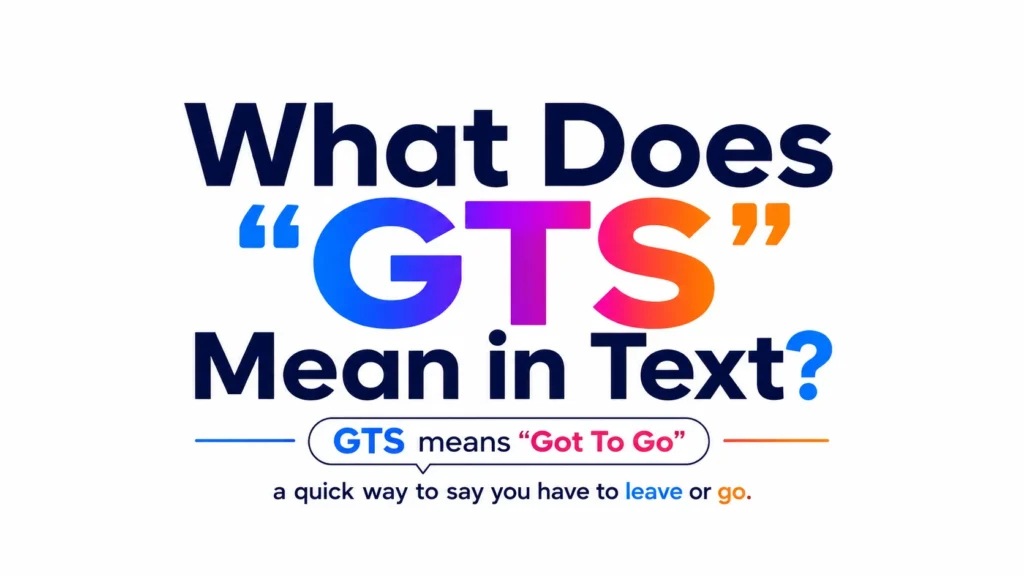
If you’ve ever received a message that simply says “GTS” and wondered what it means, you’re not alone.
Modern texting has created a language of its own. New abbreviations appear constantly across social media, messaging apps, and online communities. Some are easy to understand, while others leave people guessing.
The phrase “GTS” is one of those abbreviations that can have multiple meanings depending on the conversation. That’s exactly why so many people search for what does GTS mean in text.
Understanding the context behind GTS can prevent confusion, improve communication, and help you keep up with today’s digital conversations. Whether you saw it in a text message, Instagram DM, TikTok comment, or group chat, this guide will explain everything you need to know.
What Does GTS Mean in Text?
Quick Definition
In texting, GTS most commonly means “Go To Sleep.”
People use it when encouraging someone to get some rest, especially during late-night conversations.
Examples:
- “You’re still awake? GTS!”
- “It’s 3 AM. GTS before work tomorrow.”
- “You sound exhausted. GTS and we’ll talk later.”
However, context matters.
In some conversations, GTS can also mean:
- Go To Sleep
- Got To Go
- Google That Stuff (less common)
- Good Times Shared (rare)
Quick Examples
“You’ve been online all night. GTS.”
“I have class tomorrow, GTS!”
“Stop scrolling TikTok and GTS.”
Among younger internet users, “Go To Sleep” remains the most widely recognized meaning.
Origin & Background
The Rise of Text Abbreviations
Text messaging originally had character limits. As a result, people shortened common phrases to save time and space.
Abbreviations like:
- LOL
- BRB
- IDK
- OMG
became part of everyday communication.
Eventually, newer shortcuts emerged for phrases used in casual conversations. GTS became one of them.
Social Media Influence
Platforms like Instagram, Snapchat, TikTok, and WhatsApp accelerated the spread of texting slang.
A phrase that started in one online community could quickly become global.
When friends stayed up late chatting online, “Go To Sleep” became a frequent joke and friendly reminder. Instead of typing the full phrase, users simply wrote “GTS.”
How the Meaning Evolved
While “Go To Sleep” remains dominant, some people interpret GTS differently depending on age, region, or platform.
For example, professional contacts may assume “Got To Go,” while teenagers often understand it as “Go To Sleep.”
This flexibility explains why context is essential.
Real-Life Conversations
WhatsApp Conversation
Person A: I’ve been watching videos for four hours.
Person B: Seriously?
and,
Person A: I can’t stop.
Person B: GTS. You’ll regret this tomorrow.
Instagram DM
Person A: Why are you still active?
Person B: Just scrolling.
and,
Person A: It’s 2 AM.
and,
Person B: I know.
moreover,
Person A: GTS 😂
TikTok Comments
Person A: Me watching conspiracy videos at 4 AM.
Person B: GTS immediately.
and,
Person A: Never.
Person B: That’s exactly what someone sleep-deprived would say.
Text Message
Person A: I have an exam tomorrow and haven’t slept.
Person B: Put your phone away.
and,
Person A: Maybe.
Person B: No maybe. GTS now.
Emotional & Psychological Meaning
What Emotion Does It Express?
Most of the time, GTS communicates:
- Concern
- Affection
- Playfulness
- Care
- Mild frustration
The tone usually depends on the relationship between the people involved.
A close friend might use it jokingly, while a parent could use it seriously.
Why People Use It
Digital communication rewards speed.
People prefer short messages that convey a complete idea instantly.
GTS delivers an entire suggestion in just three letters.
What It Reveals About Modern Communication
Modern conversations prioritize efficiency.
Rather than typing a full sentence, people often rely on abbreviations to express thoughts quickly.
Interestingly, these shortcuts can still carry emotional meaning.
Someone saying “GTS” isn’t always talking about sleep. They may be expressing care, concern, or a desire to help.
A Realistic Scenario
Imagine texting a friend after midnight.
You’ve both been chatting for hours.
You mention feeling exhausted but continue sending messages.
Eventually your friend replies:
“GTS. We’ll talk tomorrow.”
The message is short, yet it communicates concern and understanding.
Usage in Different Contexts
Social Media
On social platforms, GTS is commonly used humorously.
Examples include:
- Comment sections
- Memes
- TikTok replies
- Instagram stories
Users often joke about staying awake too late.
Friends and Relationships
Among friends, GTS can feel caring and casual.
Examples:
- “You’ve been studying all day. GTS.”
- “You’re falling asleep while texting. GTS.”
In relationships, it may even feel affectionate.
Work and Professional Settings
Using GTS at work is generally not recommended.
Many professionals may not understand the abbreviation.
Instead, consider:
- “Get some rest.”
- “Let’s continue tomorrow.”
- “Have a good night.”
Casual vs Serious Tone
| Context | Tone |
| Friend chat | Casual |
| Family conversation | Caring |
| Romantic relationship | Affectionate |
| Workplace | Usually inappropriate |
| Social media | Humorous |
When NOT to Use It
Professional Communication
Avoid using GTS in:
- Business emails
- Client messages
- Formal discussions
Not everyone understands internet slang.
Sensitive Situations
If someone is discussing a serious issue, replying with only “GTS” may appear dismissive.
Empathy should come first.
Cultural Differences
Not every culture uses English texting abbreviations regularly.
Some people may misunderstand the message completely.
Important Conversations
Avoid using GTS when:
- Resolving conflict
- Discussing emotional topics
- Communicating urgent information
Clarity is often more important than speed.
Common Misunderstandings
Assuming It Always Means One Thing
The biggest mistake is believing GTS has only one meaning.
Context determines interpretation.
Tone Confusion
Some people read GTS as caring.
Others see it as rude.
The relationship between participants influences how it feels.
Literal vs Figurative Usage
Sometimes GTS literally means:
“Go get some sleep.”
Other times it means:
“Stop overthinking.”
“Take a break.”
“Log off for the night.”
Platform Differences
Meaning can shift depending on where the message appears.
TikTok users may interpret it differently from workplace chat users.
Comparison Table
| Expression | Meaning | Similarity to GTS |
| BRB | Be Right Back | Temporary absence |
| GTG | Got To Go | Closely related |
| GN | Good Night | Sleep-related |
| TTYL | Talk To You Later | Conversation ending |
| AFK | Away From Keyboard | Leaving temporarily |
| Sleep well | Rest properly | Similar intent |
| Stay awake | Opposite meaning | Opposite |
| Pull an all-nighter | Remain awake | Opposite |
Key Insight
GTS stands out because it often combines practicality with emotion. It doesn’t simply end a conversation. It usually suggests that someone cares about the other person’s well-being.
Variations and Related Types
GTG
Means Got To Go.
Used when leaving a conversation.
GN
Means Good Night.
A friendly bedtime farewell.
TTYL
Means Talk To You Later.
Suggests continuing the conversation later.
BRB
Means Be Right Back.
Temporary absence.
AFK
Means Away From Keyboard.
Common in gaming and online communities.
NVM
Means Never Mind.
Used when something is no longer relevant.
IMO
Means In My Opinion.
Shares personal viewpoints.
IDK
Means I Don’t Know.
Expresses uncertainty.
SMH
Means Shaking My Head.
Shows disappointment or disbelief.
TBH
Means To Be Honest.
Introduces a sincere opinion.
How to Respond When Someone Uses It
Casual Replies
- “You’re probably right.”
- “Okay, good night.”
- “Fine, I’m going.”
Funny Replies
- “You can’t tell me what to do.”
- “Sleep is optional.”
- “The internet needs me.”
Mature Replies
- “Good idea. I’ll rest.”
- “Thanks for looking out for me.”
- “I’ll continue tomorrow.”
Respectful Replies
- “Thank you. Have a good night.”
- “I appreciate the reminder.”
- “Take care as well.”
Regional & Cultural Usage
Western Culture
In North America and parts of Europe, texting abbreviations are deeply integrated into daily communication.
GTS is generally understood among younger users.
Asian Culture
Many Asian internet users recognize English slang because of social media exposure.
However, local abbreviations may still be more common.
Middle Eastern Culture
Usage varies widely.
English-speaking online communities understand GTS, while others may not recognize it immediately.
Global Internet Usage
Social media has created a shared digital language.
As a result, abbreviations travel quickly across countries and cultures.
Generational Differences
Gen Z
- Uses abbreviations frequently
- Learns slang rapidly
- Often understands multiple meanings
Millennials
- Familiar with most texting shortcuts
- May prefer slightly more complete messages
Older generations sometimes require additional context.
Is It Safe for Kids?
Yes, in most cases GTS is completely harmless.
When it means “Go To Sleep,” it simply encourages rest.
Parents should still teach children that online abbreviations can have different meanings depending on context.
Understanding digital language helps young users communicate more confidently and safely.
FAQs
What does GTS stand for in texting?
Most commonly, GTS stands for Go To Sleep, especially in casual conversations and social media chats.
Does GTS ever mean Got To Go?
Yes. Although less common today, some people use GTS as a shortened version of “Got To Go.”
Is GTS rude?
Usually not. It is often playful, friendly, or caring. Tone depends on context and relationship.
Do teenagers use GTS?
Yes. Many teenagers use GTS regularly in texts, group chats, and social media interactions.
Can I use GTS in professional emails?
No. Formal communication should use complete phrases instead of internet slang.
Is GTS popular on TikTok?
Yes. TikTok users frequently use GTS in comments and jokes related to staying awake late.
How do I know which meaning is correct?
Look at the surrounding conversation. Context almost always reveals whether GTS means “Go To Sleep” or something else.
Conclusion
Understanding what does GTS mean in text is easier once you recognize the context behind it.
Most often, GTS means “Go To Sleep.” It’s a quick, friendly way to tell someone they should get some rest. At the same time, alternative meanings like “Got To Go” occasionally appear, making context important.
Digital communication continues to evolve, and abbreviations like GTS reflect how people balance speed with emotional expression. A simple three-letter message can communicate concern, humor, affection, or practicality depending on the situation.
The next time you see GTS in a text, you’ll know exactly how to interpret it and respond with confidence.