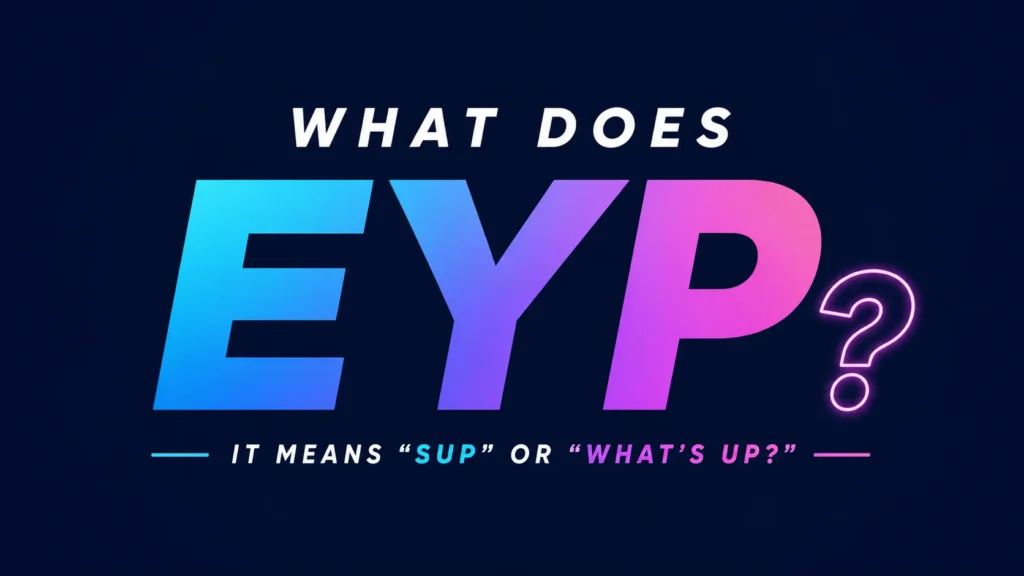
If you’ve recently seen someone type “EYP” in a text, TikTok comment, Instagram DM, or group chat, you’re definitely not alone in wondering what it means.
Modern internet slang changes fast. One week everyone is saying “FR,” the next it’s “delulu,” and suddenly people start dropping abbreviations like “EYP” without explanation. That’s exactly why so many people search for the phrase “what does eyp mean.”
The confusion usually comes from the fact that EYP can carry different meanings depending on context, tone, platform, and even the relationship between the people talking. In some conversations it sounds playful. In others, it feels emotional, sarcastic, or deeply personal.
Understanding slang today is less about dictionary definitions and more about emotional communication. People use short expressions to save time, show personality, soften emotions, or create a sense of belonging online.
In this guide, you’ll learn:
- The real meaning of EYP
- Where it came from
- How people use it in real conversations
- When it sounds friendly or awkward
- Cultural and emotional meanings behind it
- How to respond naturally
By the end, you’ll understand EYP the same way active social media users do in everyday conversation.
What Does EYP Mean? – Quick Meaning
Main Meaning of EYP
EYP is commonly used online as shorthand for:
“Everything You Post”
People usually use it when reacting to someone’s content online — especially on Instagram, TikTok, Snapchat, or X (Twitter).
It often carries admiration, teasing affection, flirtation, or emotional attachment.
For example:
- “I swear EYP makes me laugh.”
- “Why is EYP so aesthetic?”
- “Not me liking EYP at 2 AM.”
In simpler terms, the person is referring to all the content someone shares online.
Common Emotional Tones Behind EYP
Depending on the situation, EYP can sound:
- Flirty
- Supportive
- Obsessed
- Playful
- Sarcastic
- Emotionally attached
Quick Example Quotes
“EYP feels like a movie scene honestly.”
“I can’t stop checking EYP lately.”
“Bro EYP is chaotic but entertaining.”
Origin & Background
Where Did EYP Come From?
Like many internet abbreviations, EYP grew naturally from fast online communication. Social media users began shortening common phrases to type faster while keeping conversations casual and expressive.
“Everything You Post” became useful because people constantly react to each other’s stories, reels, tweets, and videos.
Instead of typing long sentences like:
- “Everything you post is funny”
- “Everything you post looks amazing”
People shortened it to:
- “EYP is hilarious”
- “EYP looks unreal”
This style fits perfectly into modern internet culture where speed and emotional impact matter more than grammar perfection.
The Influence of Social Media Culture
Platforms like:
- TikTok
- Snapchat
- Discord
encouraged shorter emotional expressions.
Younger users especially enjoy coded language because it creates identity and belonging. Using abbreviations like EYP signals familiarity with online culture.
It also creates emotional shorthand. A three-letter abbreviation can communicate admiration, attachment, or attention instantly.
How the Meaning Evolved
Originally, EYP was mostly used casually between friends.
Over time, it became more emotionally loaded.
Now it can imply:
- “I notice everything you share.”
- “I’m emotionally invested in your content.”
- “Your online presence affects me.”
That emotional layer is why EYP sometimes feels flirtier or more personal than people expect.
Real-Life Conversations
WhatsApp Conversation
1st Person:
You really deleted your old selfies?
2nd Person:
Yeah, they felt cringe.
1st Person:
No way. EYP was elite honestly.
Instagram DM
1st Person:
Why are you awake this late?
2nd Person:
Couldn’t sleep.
1st Person:
Makes sense. EYP has been keeping me entertained for an hour.
TikTok Comments
1st Person:
POV: trying to romanticize life again.
2nd Person:
Honestly EYP feels like therapy sessions sometimes.
Text Message
1st Person:
You post way too much coffee content.
2nd Person:
And yet you watch all of it.
1st Person:
Because EYP is weirdly comforting.
Emotional & Psychological Meaning
Why People Use EYP Emotionally
Internet slang is rarely just about efficiency anymore.
People use phrases like EYP because modern communication is deeply emotional but indirect. Instead of openly saying:
- “I pay attention to you”
- “I like your personality”
- “I enjoy your presence”
they soften the message through slang.
That makes interactions feel safer and less vulnerable.
What EYP Can Reveal
When someone frequently says EYP, it may suggest:
- They closely follow someone online
- They feel emotionally connected
- They admire someone’s personality
- They enjoy a person’s digital identity
In some situations, it even becomes a subtle form of affection.
A Realistic Everyday Scenario
Imagine someone quietly going through a difficult week.
They open Instagram at night and see a creator posting funny, comforting, or relatable stories. Eventually they message:
“Honestly EYP has been making my days better lately.”
That small phrase can carry genuine emotional warmth without sounding overly dramatic.
That’s part of why online slang feels powerful today. Short phrases often hide bigger emotions underneath.
Usage in Different Contexts
Social Media Usage
This is where EYP appears most often.
People use it:
- Under TikTok videos
- In Instagram replies
- On Snapchat stories
- In fandom communities
Usually it refers to someone’s entire online vibe rather than one specific post.
Example:
“it belongs in a Pinterest board.”
Friends & Relationships
Among friends, it feels playful and supportive.
In romantic situations, though, it can sound flirtier because it implies close attention.
Example:
“Why is it so calming to me?”
That sounds more emotionally invested than:
“Your posts are nice.”
Work or Professional Settings
EYP is generally too casual for professional communication.
Avoid using it:
- In workplace emails
- With clients
- During formal discussions
Many people outside internet-heavy culture may not understand it.
Casual vs Serious Tone
Casually:
“it is funny.”
More emotionally:
“it genuinely makes me feel less alone.”
The same abbreviation changes tone depending on context.
When NOT to Use It
Professional Environments
Using it at work may confuse people or appear immature.
Example to avoid:
“EYP about the company retreat was amazing.”
It sounds unclear and overly informal.
Sensitive Emotional Situations
If someone shares serious news, slang can sometimes feel emotionally disconnected.
Avoid replying:
“it is sad today.”
Instead, communicate more directly and compassionately.
Cultural Misunderstandings
Not everyone understands internet slang equally.
Older audiences or less online communities may misinterpret it completely.
Overusing It
Repeated slang usage can feel forced.
Natural communication matters more than sounding trendy.
Common Misunderstandings
People Think It Has One Fixed Meaning
Some assume it always means the same thing everywhere online.
In reality, slang changes depending on:
- Platform
- Friend group
- Tone
- Age group
Tone Gets Misread
A playful it comment may accidentally sound obsessive or sarcastic.
For example:
“I watch it constantly.”
That can sound affectionate or creepy depending on delivery.
Literal vs Figurative Meaning
Sometimes people aren’t literally talking about every post.
They may simply mean:
- “Your content overall”
- “Your online energy”
- “Your personality online”
Comparison Table
| Expression | Meaning | Tone | Similarity to EYP |
| EYP | Everything You Post | Personal / emotional | Direct match |
| FR | For Real | Honest / casual | Less personal |
| IYKYK | If You Know You Know | Insider vibe | More mysterious |
| Stan | Deep admiration | Intense fandom | Stronger than EYP |
| Mood | Relatable feeling | Casual | Less targeted |
| NPC | Emotionless behavior | Insulting | Opposite emotional tone |
| Lowkey obsessed | Quiet admiration | Flirty | Very similar |
| Chronically online | Always online | Mocking | Related internet culture |
Key Insight
it stands out because it combines attention, emotion, and internet culture into one short phrase. It’s less about grammar and more about connection.
Variations / Types
“EYP is iconic”
Used to praise someone’s content style.
“EYP never misses”
Means their posts are consistently good.
“EYP lately though…”
Suggests recent posts have become especially noticeable.
“I live for EYP”
Expresses strong enjoyment.
“EYP is healing”
Used when content feels emotionally comforting.
“EYP has me crying”
Usually means something is extremely funny or emotional.
“Not me stalking EYP”
Playfully admits checking someone’s profile often.
“EYP deserves more attention”
Means the creator is underrated.
“EYP feels cinematic”
Suggests aesthetic or emotional storytelling.
“EYP is dangerously relatable”
Used when content feels personally accurate.
How to Respond When Someone Uses It
Casual Replies
- “Haha thank you.”
- “You actually watch all that?”
- “That’s kind of sweet honestly.”
Funny Replies
- “My posting addiction appreciates you.”
- “Proof I overshare successfully.”
- “I should start charging subscription fees.”
Mature Replies
- “I’m glad the content connects with you.”
- “That genuinely means a lot.”
- “Thanks for noticing the effort.”
Respectful Replies
- “I appreciate that.”
- “Thank you for the support.”
- “That’s really kind of you to say.”
Regional & Cultural Usage
Western Culture
In North America and parts of Europe, EYP often feels expressive and personality-driven.
Online identity is closely connected to self-expression there, so people naturally comment on each other’s content habits.
Asian Culture
In many Asian online communities, reactions are often softer and more indirect emotionally.
it may be used more subtly to avoid sounding too intense while still showing appreciation.
Middle Eastern Culture
In Middle Eastern digital spaces, tone and respect matter strongly.
Among close friends, it may sound warm and familiar. In formal interactions, though, it may feel too casual.
Global Internet Usage
Globally, internet slang spreads through:
- TikTok trends
- Gaming communities
- Meme culture
- Fan edits
- Influencer content
That’s why even people from different countries often understand the emotional tone behind it quickly.
Generational Differences
Gen Z Usage
Gen Z tends to use it naturally and emotionally.
For younger users, digital presence is closely tied to identity.
Millennials
Millennials may understand it but use it less frequently.
Some interpret it more literally because they grew up before fast-moving slang culture became dominant.
Is It Safe for Kids?
Understanding the Context
EYP itself is generally harmless.
It’s not considered offensive, explicit, or dangerous slang.
However, context still matters.
If children are using it excessively in emotionally intense online interactions, parents should stay aware of:
- Parasocial attachment
- Excessive social media validation
- Online dependency
The phrase itself isn’t risky, but modern digital communication can influence emotional development if left completely unchecked.
FAQs
What does EYP stand for in texting?
it commonly stands for “Everything You Post.” People use it to refer to someone’s online content collectively.
Is EYP a compliment?
Usually yes. In most conversations, it expresses admiration, attention, or emotional connection.
Is EYP flirtatious?
It can be. When someone repeatedly comments on “everything you post,” it may imply romantic or emotional interest.
Where is EYP mostly used?
You’ll mostly see it on TikTok, Instagram, Snapchat, and messaging apps.
Can EYP be sarcastic?
Yes. Tone matters heavily online. Depending on wording, it may sound playful, mocking, or sincere.
Do older people use EYP?
Less commonly. it is more popular among younger internet users, especially Gen Z.
Is EYP formal language?
No. It’s internet slang and should stay in casual digital communication.
Conclusion
Understanding what it means goes beyond decoding three letters.
It reflects how people communicate emotionally online today. Short expressions now carry layers of personality, attention, humor, comfort, and connection.
Whether someone uses it playfully, affectionately, or casually, the phrase usually signals one important thing: they’re paying attention.
That’s why it resonates so strongly in modern conversations.
Language online continues evolving fast, but the emotions underneath remain familiar — people still want to feel seen, understood, entertained, and connected.
Now when you see it in a comment, DM, or text message, you’ll understand not just the meaning, but the feeling behind it too.