Why Finding an Authentic Japanese Death Name Is Difficult
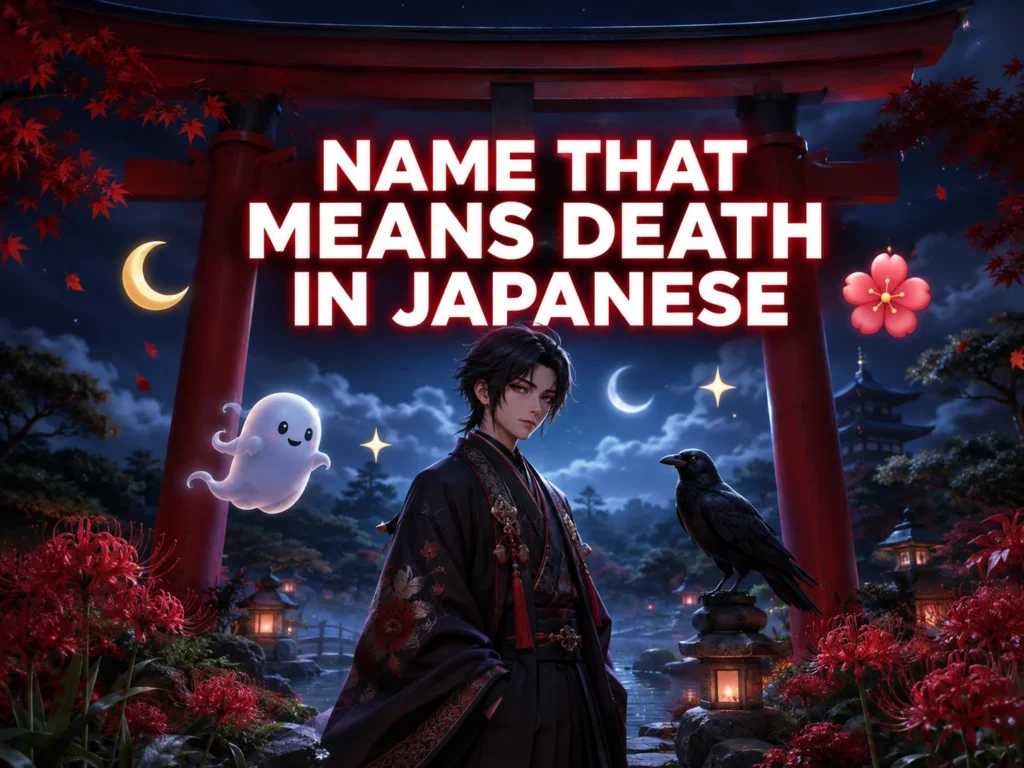
People often search for a name that means death in Japanese when creating an anime character, gaming identity, fantasy villain, novel protagonist, or dark social media username.
The direct Japanese word for death is shi, written as 死. However, Shi is a vocabulary word, not a conventional Japanese personal name.
This distinction is important. Many online lists present ordinary Japanese names as meaning “death” even when their kanji actually mean moon, beauty, darkness, spirit, night, or flowers.
Japanese names receive their meanings from the kanji used to write them. The same pronunciation can have several completely different meanings depending on the selected characters.
For creative purposes, Shi, Yomi, Shinigami, Meikai, and Shūen can produce a powerful death-related identity. For a real baby name, these words would generally sound unnatural, ominous, or culturally inappropriate.
A Name That Means Death in Japanese: Quick Answer
The most direct option is:
Shi: 死
Pronunciation: Shee
Meaning: Death
Best use: Fictional character, gamer tag, symbolic title, or dark nickname
Shi is an exact translation of “death,” but it is not an ordinary Japanese given name. Using it as a character name makes the symbolism extremely direct.
Three simple examples include:
“The warrior was known only as Shi.”
“Shi entered the arena without speaking.”
“Everyone feared the name Shi because it represented death itself.”
Other accurate death-related Japanese words include:
- Shinigami, 死神: god or spirit of death
- Yomi, 黄泉: the land of the dead
- Meikai, 冥界: the underworld or realm of the dead
- Shūen, 終焉: the end, demise, or final moment
- Metsu, 滅: destruction or extinction
- Bōrei, 亡霊: ghost or departed spirit
- Yūrei, 幽霊: ghost
- Shisha, 死者: a dead person or the deceased
- Shikabane, 屍: corpse
- Tamashii, 魂: soul
Most of these are words or titles rather than genuine personal names. Their best use is in fiction, games, artwork, and symbolic projects.
Origin and Cultural Background
The Japanese character associated most directly with death is 死. It is read as shi in its noun form and appears in the verb shinu, 死ぬ, meaning “to die.” JapanDict’s entry for 死 records the character’s death-related meaning and readings.
Why Shi carries such a heavy feeling
Shi is also one possible pronunciation of the number four, 四. Because four and death can share the pronunciation “shi,” the number may carry unlucky associations in certain Japanese settings.
The word does not normally possess the romantic or fashionable darkness that international audiences sometimes imagine. To a Japanese speaker, 死 is direct and emotionally heavy.
That is why it can work effectively for a villain, supernatural warrior, cursed weapon, or horror story. It may feel uncomfortable as an ordinary person’s name.
The cultural idea of Shinigami
Shinigami is written as 死神:
- 死 means death.
- 神 means god, spirit, or divine being.
The term describes a being associated with governing or bringing death. Japanese reference sources define a shinigami as a god or supernatural entity connected with death and the realm of the dead. Kotobank’s definition of 死神
Anime, manga, games, and international entertainment have made this word familiar far beyond Japan. Still, it is a supernatural title rather than a traditional personal name.
How Japanese personal names work
Japanese given names are commonly written with kanji selected for sound, meaning, family preference, and cultural associations.
Two people can have names with the same pronunciation but different kanji and meanings. For example, a name pronounced “Mei” could be written with characters associated with brightness, a bud, beauty, or other positive ideas.
You cannot determine a Japanese name’s exact meaning from its Romanized spelling alone. The kanji must be examined.
Japan also maintains official information about which kanji may be used when registering children’s names. Legal character availability and cultural suitability are separate questions. A technically available character is not automatically a normal or socially comfortable name choice. Japan’s Ministry of Justice naming guidance
Real-Life Conversations About Choosing the Name
Context changes whether a death-related Japanese word sounds powerful, inaccurate, or inappropriate.
Discord gaming conversation
Person A: I need a Japanese name that literally means death.
Person B: Shi means death, but it isn’t a normal personal name.
and,
Person A: That’s fine. It’s for my final boss character.
Person B: Then Shi works, especially if you want the meaning to be obvious.
Instagram DM between writers
Person A: I’m naming a guardian who leads souls into the afterlife.
Person B: Shinigami might be too direct. What about Yomi?
Person A: Yomi feels more mysterious.
Person B: Use Yomi as the name and “Guardian of the Underworld” as the title.
TikTok comment discussion
Person A: Does Kuro mean death in Japanese?
Person B: No, kuro means black.
and,
Person A: So why is it on so many death-name lists?
Person B: Because black has dark associations, but that doesn’t make the translation “death.”
Text conversation about a game username
Person A: Should I use Shikabane as my username?
Person B: It means corpse, so it sounds much more graphic than you may intend.
and,
Person A: I wanted something dark, not disturbing.
Person B: Try Kage, meaning shadow, or Shūen, meaning demise or the final end.
These conversations show why accurate translation matters. A word may match the general aesthetic while expressing something far more intense than expected.
Emotional and Psychological Meaning
A death-related name can symbolize much more than physical death.
Writers and gamers often use these names to represent:
- Transformation
- The end of an identity
- Fearlessness
- Revenge
- Spiritual transition
- Mystery
- Grief
- Finality
- Rebirth
- Power over mortality
Shi feels blunt and absolute. It suits a character whose presence represents an unavoidable ending.
Yomi feels mysterious because it suggests a place beyond ordinary life. It can suit an underworld guide, silent warrior, or character caught between two worlds.
Shūen carries a more poetic sense of conclusion. It may work for a character who ends wars, closes eras, or appears during the final chapter of a story.
Consider a fictional warrior who survives a devastating battle and abandons his former identity. Calling him Shi does not necessarily mean he is dead. The name can communicate that his previous self no longer exists.
This symbolic layer makes dark names emotionally interesting. The best choice reflects the character’s story rather than merely sounding dangerous.
Usage in Different Contexts
Anime and manga characters
Fiction provides the greatest freedom. A character can carry a symbolic name, title, or alias that would sound unusual in daily Japanese life.
Strong options include:
- Shi
- Yomi
- Meikai
- Shūen
- Shinigami
- Shi no Kage
Gaming usernames
Short words are usually more memorable in multiplayer games. Consider:
- ShiX
- YomiBlade
- Meikai
- Shuen
- Metsu
- KageShi
- YomiReaper
- SoulOfYomi
Check availability and avoid adding too many random numbers.
Fantasy novels
A fantasy writer can use the Japanese word directly or build a title around it:
- Yomi, Keeper of Lost Souls
- Shi, the Final Blade
- Meikai, Lord of the Silent Realm
- Shūen, Bringer of the End
- Kage, Shadow Beyond Life
If the story is set in real Japan, greater cultural and linguistic accuracy is necessary. A Japan-inspired fantasy world allows more creative freedom, but the words should still be translated correctly.
Tattoos
Death-related kanji should be approached carefully. The character 死 communicates literal death very directly. It may not carry the elegant philosophical meaning the wearer imagines.
For mortality, transformation, or life’s temporary nature, concepts such as mujō, 無常, meaning impermanence, may express greater depth.
Always confirm permanent Japanese text with a qualified native speaker before using it in a tattoo.
Real personal names
Shi, Shinigami, Shikabane, and Shisha are unsuitable as ordinary Japanese personal names.
If you want an authentic human name with a dark but less disturbing atmosphere, choose a real name and give the character a death-related title.
For example:
“Rei, the Shadow of Yomi”
The title carries the dark symbolism without pretending that the person’s actual name literally means death.
When Not to Use These Names and Common Misunderstandings
Do not use a death-related Japanese expression without confirming its literal meaning, emotional force, and grammatical function.
Do not assume dark means death
Several Japanese words appear on “death name” lists even though their meanings are different:
- Kuro means black.
- Kage means shadow.
- Yoru means night.
- Tsuki means moon.
- Akumu means nightmare.
- Tamashii means soul.
- Yūrei means ghost.
- Jigoku means hell.
These words may support a dark character concept, but they do not literally mean death.
Do not call every Japanese word a name
Shinigami is a title or category of supernatural being. Shikabane means corpse. Shisha refers to the dead or deceased.
Calling them traditional Japanese names would be misleading.
Avoid random kanji combinations
Combining two visually attractive kanji can accidentally produce an unnatural, confusing, or offensive expression.
Japanese is not a decorative code in which every character can be placed beside another freely. The combination must make linguistic sense.
Be careful with grief and memorial contexts
Shi may be too blunt when discussing a real person’s death. A softer expression is normally preferred in sensitive conversation.
Dark fictional names can be entertaining, but real bereavement requires a different level of respect.
Do not trust Romanized spelling alone
A name such as “Rei” can have many possible kanji forms. Its meaning is not automatically “spirit” simply because one character pronounced rei relates to spiritual concepts.
Ask which kanji are being used before accepting any name translation.
Comparison of Japanese Death-Related Words
| Japanese term | Writing | Accurate meaning | Suitable as a real name? | Best creative use |
|---|---|---|---|---|
| Shi | 死 | Death | No | Villain alias or gamer tag |
| Shinigami | 死神 | God or spirit of death | No | Supernatural title |
| Yomi | 黄泉 | Land of the dead | Generally no in this form | Mysterious character name |
| Meikai | 冥界 | Realm of the dead | No | Underworld kingdom or ruler |
| Shūen | 終焉 | Demise or final end | No | Poetic character alias |
| Metsu | 滅 | Destruction or extinction | Not normally | Warrior or attack name |
| Shisha | 死者 | Deceased person | No | Horror title |
| Shikabane | 屍 | Corpse | No | Horror creature or grim alias |
| Yūrei | 幽霊 | Ghost | No | Spirit character |
| Bōrei | 亡霊 | Ghost or departed spirit | No | Vengeful apparition |
| Kage | 影 | Shadow | Possible as an alias | Ninja or mysterious character |
| Mujō | 無常 | Impermanence | Not usually | Philosophical title |
Key Insight
Shi is the closest direct answer, but it is a word meaning death rather than an authentic personal name. Yomi, Meikai, and Shūen offer more atmospheric alternatives for creative projects.
Variations and Types of Death-Inspired Names
1. Shi: 死
Meaning: Death
Tone: Direct, cold, final
Shi is best for a villain, cursed warrior, final boss, or minimalist username.
2. Shinigami: 死神
Meaning: God or spirit of death
Tone: Supernatural and commanding
Use it as a title, species, role, or faction rather than an ordinary human name.
3. Yomi: 黄泉
Meaning: The land of the dead
Tone: Mythological and mysterious
Yomi works well for an underworld character, dark kingdom, gaming clan, or mystical weapon.
4. Meikai: 冥界
Meaning: The underworld or realm of the dead
Tone: Grand and otherworldly
It is suitable for a fictional empire, dimension, tournament, or ruler.
5. Shūen: 終焉
Meaning: Demise, ending, or final moment
Tone: Poetic and dramatic
Shūen is less blunt than Shi and works beautifully for a character connected with finality.
6. Metsu: 滅
Meaning: Destruction, extinction, or annihilation
Tone: Aggressive and powerful
It suits a fighter, destructive ability, weapon, or gaming identity.
7. Shisha: 死者
Meaning: The dead or a deceased person
Tone: Formal and grim
This is better as a horror title, such as “King of the Shisha,” than as a personal name.
8. Bōrei: 亡霊
Meaning: Ghost or departed spirit
Tone: Haunting and sorrowful
Bōrei can represent a character unable to leave the past behind.
9. Yūrei: 幽霊
Meaning: Ghost
Tone: Supernatural and familiar
It works for a spirit character, horror username, or paranormal story.
10. Shikabane: 屍
Meaning: Corpse
Tone: Graphic and disturbing
Use this only when the harsh meaning is intentional. It is not a subtle death reference.
11. Mujō: 無常
Meaning: Impermanence or the temporary nature of existence
Tone: Philosophical and reflective
Mujō is ideal when the theme is mortality rather than physical death.
12. Shi no Kage: 死の影
Meaning: Shadow of death
Tone: Cinematic and threatening
This phrase makes a powerful title for a warrior, assassin, clan, or fantasy chapter.
How to Choose and Respond to a Death-Related Name
Start by deciding what “death” represents in your project.
If you want literal death, choose Shi. If you want an underworld atmosphere, Yomi or Meikai will feel richer.
For destruction, Metsu is more appropriate.
and, For ghosts, choose Yūrei or Bōrei. For philosophical mortality,
moreover, Mujō offers a thoughtful alternative.
Casual responses
If someone says, “My character is named Shi,” you could reply:
- “That literally means death, so it fits.”
- “Simple, dark, and direct.”
- “That works well for a villain.”
- “Is Shi the real name or a title?”
Funny responses
- “That character definitely isn’t here to make friends.”
- “Subtlety has left the conversation.”
- “The final boss has arrived.”
- “I’m guessing the backstory isn’t cheerful.”
Mature responses
- “The meaning is accurate, but it would not sound like a conventional Japanese personal name.”
- “Yomi may offer a more mysterious alternative.”
- “Consider using it as an alias rather than a birth name.”
- “Check the kanji carefully before finalizing it.”
Respectful responses
- “What symbolism do you want the name to carry?”
- “Are you looking for literal death or a poetic association?”
- “Will the name be used for fiction, gaming, or a real person?”
- “A native-language check would help if the project is permanent.”
Regional and Cultural Interpretation
Japanese cultural interpretation
A Japanese reader is likely to recognize Shi as the ordinary word for death, not a stylish traditional name.
Shinigami will immediately suggest a supernatural death figure. Yomi and Meikai point toward the underworld rather than describing a person who causes death.
Western interpretation
Western anime and gaming audiences may perceive Japanese death-related words as mysterious, elegant, or powerful.
This reaction is influenced by entertainment. The same word may feel much more literal or ordinary to a native Japanese speaker.
Asian interpretation outside Japan
Chinese characters are used across several linguistic traditions, but their readings and cultural associations differ.
A character that appears visually identical may be pronounced differently in Japanese and Chinese. Do not present a Japanese reading as universal across Asian languages.
Global internet usage
Gaming and anime communities often turn Japanese nouns into usernames. That practice is acceptable for creative expression when the translation is accurate and the name does not falsely claim cultural authenticity.
Generational differences
Younger audiences familiar with anime may recognize Shinigami immediately. Older speakers may interpret the word through folklore, literature, or its plain supernatural meaning rather than through popular entertainment.
Are Death-Related Japanese Names Safe for Kids?
The words themselves are not profanity, but some meanings are too graphic for young children.
Safer dark options include:
- Kage, shadow
- Yoru, night
- Yomi, underworld
- Mujō, impermanence
- Tamashii, soul
More disturbing choices include:
- Shikabane, corpse
- Shisha, the deceased
- Shi, literal death
- Metsubō, destruction or ruin
For a child’s game username, “ShadowYomi” is likely more appropriate than “Shikabane.”
These terms should not be used as real children’s names without understanding Japanese naming practices, kanji meanings, and social consequences.
Frequently Asked Questions
What Japanese name literally means death?
Shi, written 死, literally means death. However, it is a Japanese word rather than a conventional personal name.
Is Shi a real Japanese name?
Shi is not normally used as an ordinary Japanese given name with the kanji 死. It works better as a fictional alias, title, or gaming identity.
What Japanese name means god of death?
Shinigami, written 死神, means a god or spirit associated with death. It is a supernatural term, not a traditional human name.
What Japanese name means underworld?
Yomi, 黄泉, refers to the land of the dead. Meikai, 冥界, means the underworld or realm of the dead.
Does Kuro mean death?
No. Kuro means black. It can create a dark atmosphere, but its literal meaning is not death.
What Japanese word means the end or demise?
Shūen, written 終焉, means an ending, demise, or final moment. It offers a poetic alternative to the blunt word Shi.
What is a good Japanese death name for a game?
Shi, Yomi, Meikai, Metsu, Shūen, YomiReaper, KageShi, and SoulOfYomi are strong gaming options. Check username availability before choosing one.
Choosing Darkness Without Losing Accuracy
The clearest name that means death in Japanese is Shi, written 死. It is accurate, powerful, and immediately connected with mortality, but it is not a normal personal name.
For creative work, Yomi suggests the land of the dead, Meikai evokes the underworld, Shinigami represents a death spirit, and Shūen communicates a poetic ending.
Choose according to the character’s emotional purpose. Literal death, spiritual transition, destruction, ghostly existence, and impermanence are related ideas, but Japanese uses different words for each one.
A meaningful dark name becomes more powerful when its language is correct. Understanding the cultural weight behind the word will make your character, story, username, or artwork feel intentional rather than randomly decorated.